Every ham knows the feeling. You open your equipment closet, look at a bench full of perfectly functional transceivers, and think: “I need one more.”
When I treated myself to an early Christmas gift in the form of the brand-new Yaesu FTX-1 Optima, anyone looking strictly at the specs on paper could easily argue it was redundant in my shack. Between my base station and existing portable rigs, every band and mode was already covered.

However, real-world operating isn’t done on paper—it’s done out in the field, in parking lots, on mountain tops, and through shifting ionospheric conditions. Having been licensed since 2022 and currently holding a General Class license, my background as a lifelong tech professional always pushes me to evaluate gear through a system-level lens: workflow, operational friction, and power efficiency.
Here is why the Yaesu FTX-1 Optima made immediate sense for my field operations, how it solves specific gaps in my existing setup, and why its modular architecture is crucial as we face changing propagation conditions over the coming years.
What is the Yaesu FTX-1 Series?
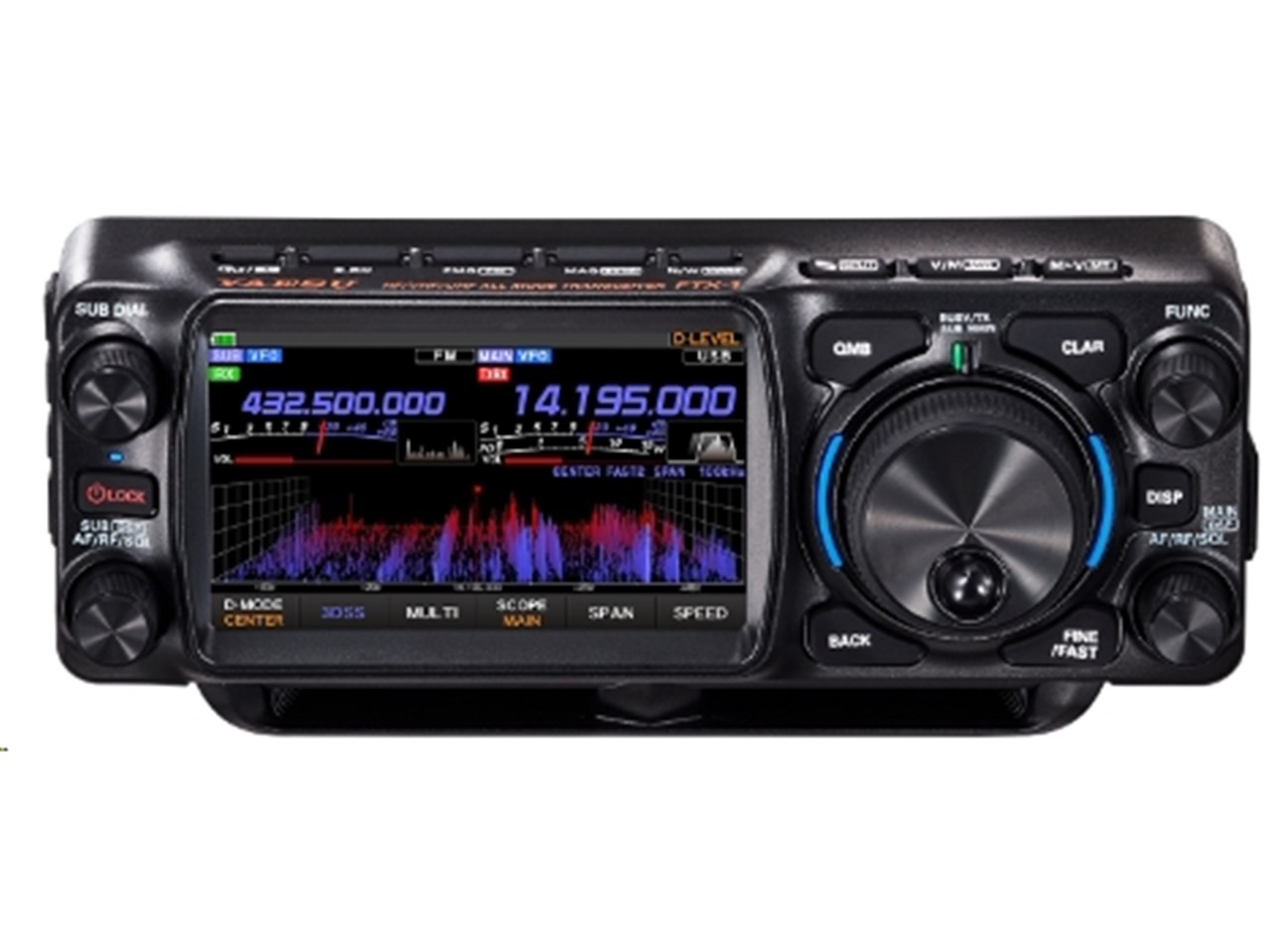
The Yaesu FTX-1 Series is Yaesu’s latest entry into the portable, all-mode, field-transceiver market. Built to succeed legacy field icons like the FT-857, it covers HF, 6 meters, 2 meters, and 70 centimeters across SSB, CW, AM, FM, and Yaesu’s C4FM digital mode.
It brings modern SDR (Software Defined Radio) architecture into a field-ready package, featuring a high-resolution touch display, real-time spectrum scope with 3DSS (3-Dimensional Spectrum Display), and dual-receiver capability.
The Game-Changer: Field vs. Optima Configurations
What makes the FTX-1 distinct from virtually every other portable rig on the market is its native modular power architecture:
- Field Configuration: Operates as an ultra-compact, lightweight QRP field unit running up to 10 Watts of RF output (powered via external DC or attachable high-capacity lithium-ion battery packs).
- Optima Configuration: By attaching the high-efficiency cooling fan and power module, the rig instantly transforms into a high-power field station capable of 100 Watts on HF/6m and 50 Watts on 2m/70cm (VHF/UHF).
       +-------------------------------------------------------+
       |               Yaesu FTX-1 Core Unit                   |
       |     All-Mode / All-Band (HF + 6m + 2m + 70cm)         |
       +---------------------------+---------------------------+
                                   |
                  +----------------+----------------+
                  |                                 |
                  v                                 v
    +---------------------------+     +---------------------------+
    |    Field Configuration    |     |   Optima Configuration    |
    |  • Lightweight & Compact  |     |  • Attach Cooling / Amp   |
    |  • 10W Max Output (QRP)   |     |  • 100W HF/6m | 50W V/U   |
    |  • Battery Pack Ready     |     |  • High-Duty Deployments  |
    +---------------------------+     +---------------------------+
Rather than forcing you to choose between carrying a tiny 10W QRP rig or a heavy 100W radio, the FTX-1 lets you scale your station weight and power directly to the mission.
The “Why”: Solving the Redundancy Paradox
To understand why the FTX-1 earned a spot on my bench, you have to look at the radios I already own: the Yaesu FTDX-10, the Yaesu FT-891, and the Icom IC-705.
| Feature / Capability | Yaesu FTDX-10 | Yaesu FT-891 | Icom IC-705 | Yaesu FTX-1 Optima |
|---|---|---|---|---|
| Primary Role | Desktop Base Station | Mobile / Portable | Backpack QRP | Primary Portable / Field |
| Bands Covered | HF / 6m | HF / 6m | HF / 6m / 2m / 70cm | HF / 6m / 2m / 70cm |
| Max Power Output | 100W | 100W | 10W | 10W (Field) / 100W (Optima) |
| UI & Menus | Yaesu Touch UI / 3DSS | Classic LCD & Keypads | Icom Touch / Waterfall | Yaesu Touch UI (FTDX-10 style) |
| All-Mode VHF/UHF | No | No | Yes | Yes |
UI Ecosystem & Muscle Memory My primary desktop rig is the FTDX-10. Working in tech, I value UI consistency. Switching between completely different menu structures when you’re setting up on a picnic table or in a park introduces friction. The FTX-1 shares the core menu logic, touchscreen layout, and visual flow of the FTDX-10 line. Adjusting filtering, notch controls, or RF gain feels natural because my brain doesn’t have to context-switch.
Outgrowing the FT-891 in the Field The FT-891 has been my trusty field horse. It pumps out a full 100 Watts on HF in a small package, but it has notable trade-offs: it lacks VHF/UHF all-mode capabilities, consumes significant idle current, and lacks a built-in visual spectrum scope. For satellite work, VHF/UHF SSB, or quick band activity checks, the FT-891 requires external accessories or guesswork.
The Power Ceiling of the IC-705 The Icom IC-705 is an incredible piece of engineering—Wi-Fi integration, crisp display, and full all-band coverage. But its 10 Watt ceiling is a real constraint. While QRP is fun when solar propagation is firing on all cylinders, running 5 to 10 Watts into temporary field wire antennas can turn POTA (Parks on the Air) activations into grueling grinding sessions when bands are crowded or noisy. Additionally, moving between Icom’s menu hierarchy and Yaesu’s system required constant re-learning.
Solar Cycle 25 & The Need for 100W Portable Punch
We are approaching the backside of Solar Cycle 25. While recent years delivered fantastic HF propagation, solar activity will inevitably decline over the coming years.
As solar flux indices drop and geomagnetic disturbances increase, band conditions will become more volatile. Signal-to-noise ratios will drop, noise floors will rise, and band openings will grow shorter and less predictable.
  Solar Flux High (Peak Cycle) -------> 5-10W QRP works effortlessly
  Solar Flux Declining (Late Cycle) ---> 100W punch required to cut through noise
When conditions deteriorate:
- QRP (10W) becomes a challenge: Signals get buried under ambient band noise or lost in pileups.
- 100W Power Punch saves activations: Having 100 Watts on HF/6m in the Optima setup means you can push through poor propagation, complete contacts rapidly, and ensure clear readability without lugging an external linear amplifier.
When conditions are booming, I can pop off the amp/fan module and run lightweight 10W QRP. When conditions sour, the Optima module gives me more field power in seconds.
Early Adopter Reality: Navigating Firmware & Growing Pains
As with almost every modern SDR transceiver launched in recent years, early adopters of the FTX-1 are experiencing initial firmware revisions and software polish from Yaesu.
Coming from a software and technology background, I view this as a normal part of modern radio hardware lifecycles. Yaesu has an established track record of actively supporting their rigs post-launch (as seen with continuous updates for the FTDX-10 and FT-710). The early firmware updates have already addressed initial user feedback, refined scope response rates, and optimized power management.
Reshuffling the Stable: The Bronco Mobile Plan
Adding the FTX-1 isn’t just about getting a new field rig—it triggers a positive cascade across my entire radio collection:
- Yaesu FTDX-10: Remains anchored as the high-performance HF/6m home base station.
- Yaesu FTX-1 Optima: Takes over as the primary, high-flexibility field and POTA station (HF/VHF/UHF, 10W/100W).
- Yaesu FT-891: Transitioning to a permanent/semi-permanent mobile installation in my Ford Bronco. Its rugged chassis and 100W output make it the perfect dedicated trail radio for overlanding and mobile HF paired with an ATAS-120 Antenna.
- Elecraft KX2 is my ultimate portable POTA / SOTA travel radio. It’s small compact and is not going anywhere, except on travels when I need to pack light.
What about the IC-705
I haven’t decided what to do about the Icom IC-705, it was my first HF rig I purchased when I got my Generals license. It has some truly unique capabilities like the wifi hotspot and the ability to be remotely controlled. But it is the odd duck here, my KX2 is smaller and lighter than both the 705 and FTX-1 if I need an ultra portable. the 705 and FTX-1 similar bands and output when in field configuration. I think the right thing to do would be to sell the radio to another ham operator that would use it. What do you think? should I keep it as a dedicated Wi-Fi digital mode ops, and portable QRP rig or maybe for a dedicated go box build?.
What’s Next?
Upgrading your station isn’t always about filling an empty slot on a spec sheet—it’s about optimizing how you operate out in the world. The FTX-1 Optima bridges the gap between lightweight QRP portability and heavy-duty 100W field performance, all while keeping my operating workflow unified across my home and field setups.
In an upcoming post, I’ll be sharing a full tour of my Radio Stable, breaking down the exact shack layout, power budgets, and specific use cases for every rig in my lineup!
Until next time, happy thanksgiving, merry christmas, happy holidays and see you all in the new year!!
73,
Chris - K5CTW
The Ham Radio Lab