There is a specific kind of magic that happens on the fourth weekend of June. Across North America, thousands of amateur radio operators leave their comfortable home shacks to set up antennas in parks, parking lots, and remote fields. This is ARRL Field Day, and after getting licensed in 2022 and upgrading to General last year, I finally got to experience the organized chaos firsthand.
What is the Mission of Field Day?
According to the ARRL, Field Day is more than just a contest; it is a demonstration of emergency preparedness. The objective is to set up a station in “less-than-optimal” conditions to prove we can provide vital communications when the grid fails.
Points are awarded not just for contacts, but for the technical challenges we overcome:
- Operating off-grid (battery and solar power).
- Setting up in public spaces (to educate the community).
- Engaging “GOTA” (Get On The Air) operators (helping unlicensed folks make their first contact).
The Park Setup: A Lesson in Troubleshooting
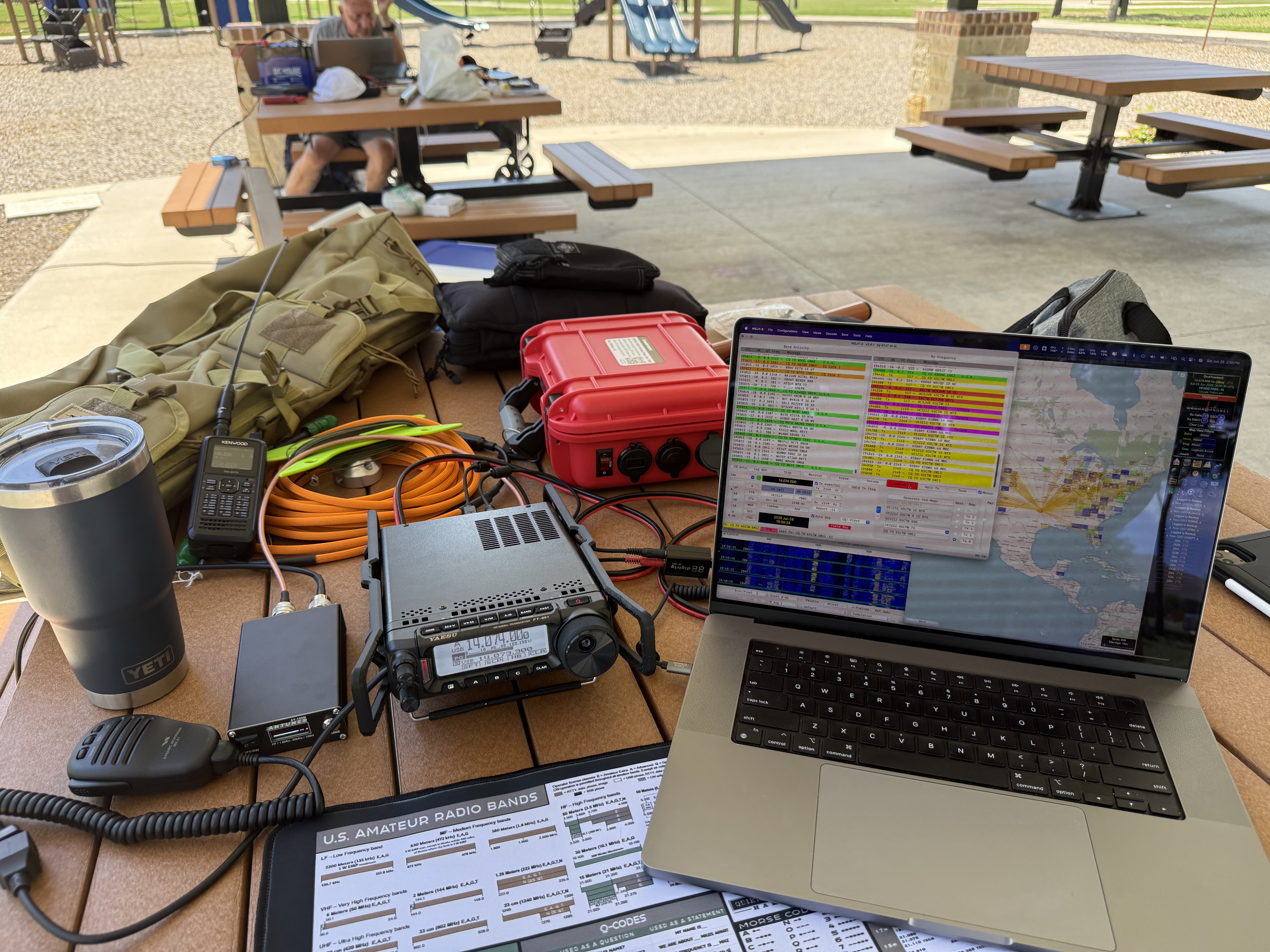
I spent the first part of the weekend at a local park near my home with two other hams. We were a lean team, but we had big plans. I brought my trusty Yaesu FT-891 to focus on FT8 digital mode on 20 meters. One neighbor took the helm on SSB (Voice), while our third operator… well, he faced the reality of Field Day: technical gremlins.
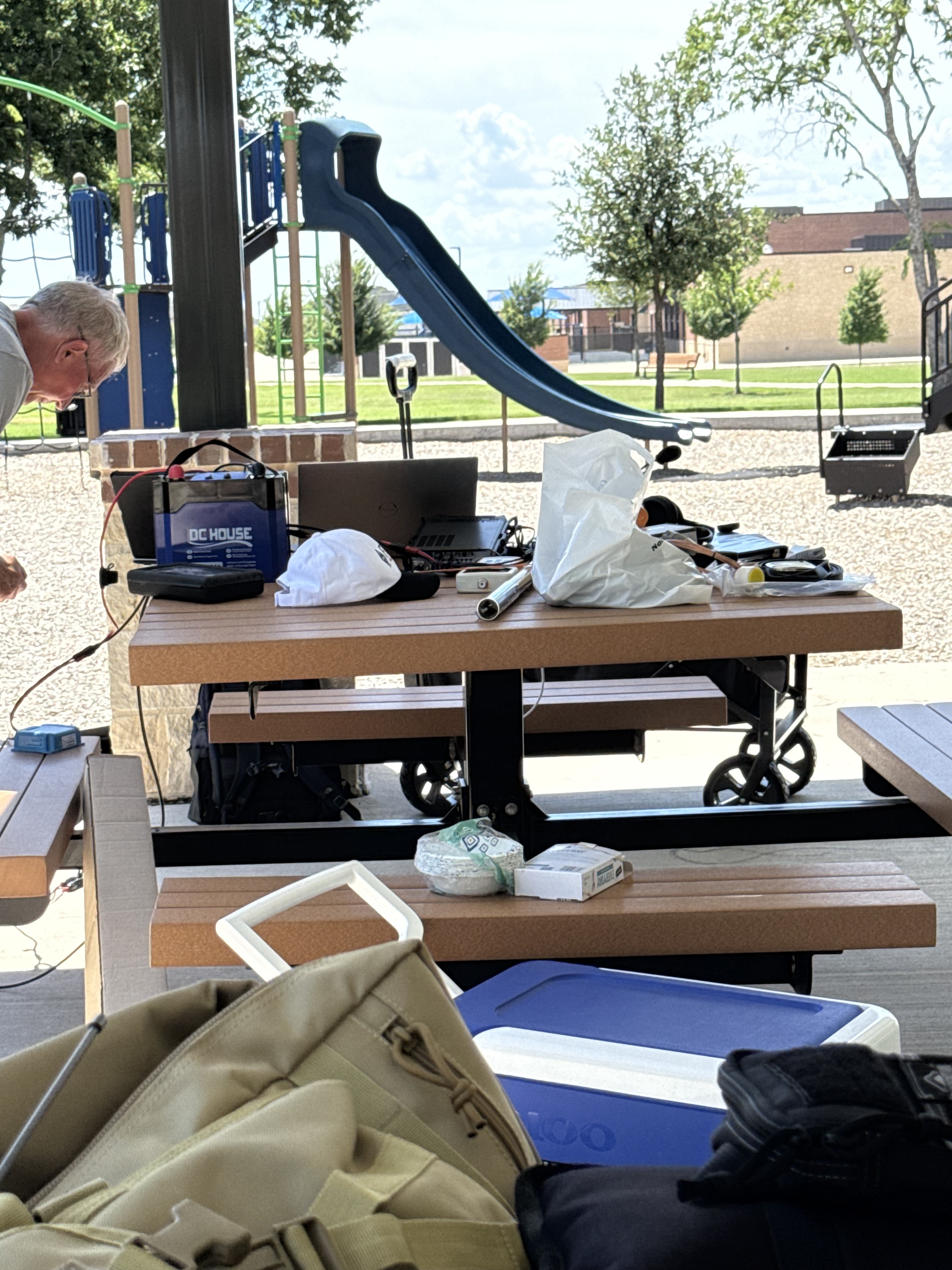
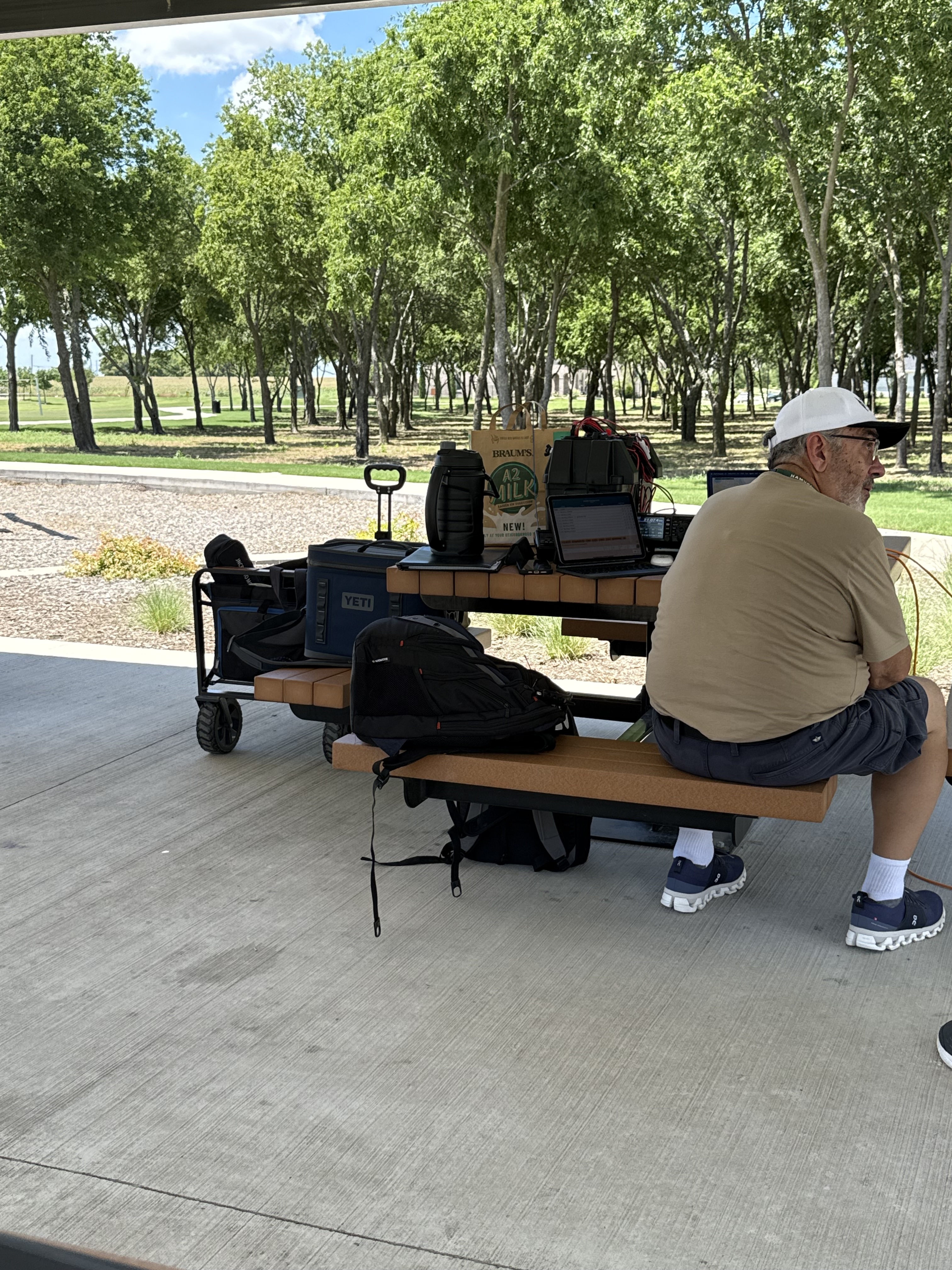
His equipment struggled to play nice with the temporary environment, which served as a perfect reminder that Field Day is exactly where you want to find these bugs—not during a real emergency!
The Challenges
It wasn’t just my teammate having issues. I ran into a frustrating software / hardware problems between my laptop running WSJT-X and the FT-891. Between the software glitches and the sheer volume of operators on the 20m band, making contacts felt like a battle. The band conditions were tough, and the noise floor was high, but that’s the reality of portable ops!
The Highlight: Inspiring the Next Generation
Despite the technical hurdles, the most rewarding part of the day had nothing to do with my logbook. Being in a neighborhood park meant we had a steady stream of curious kids and parents stopping by.
There is nothing quite like seeing a child’s eyes go wide when they realize the voice coming through the static is a real person thousands of miles away. We let several kids partner with us to broadcast, giving them a front-row seat to the wonder of radio. If we inspired even one of them to look into a STEM career or pick up a license later, the 100-degree heat was worth it.
Joining the Pros: The McKinney Amateur Radio Club (MARC)
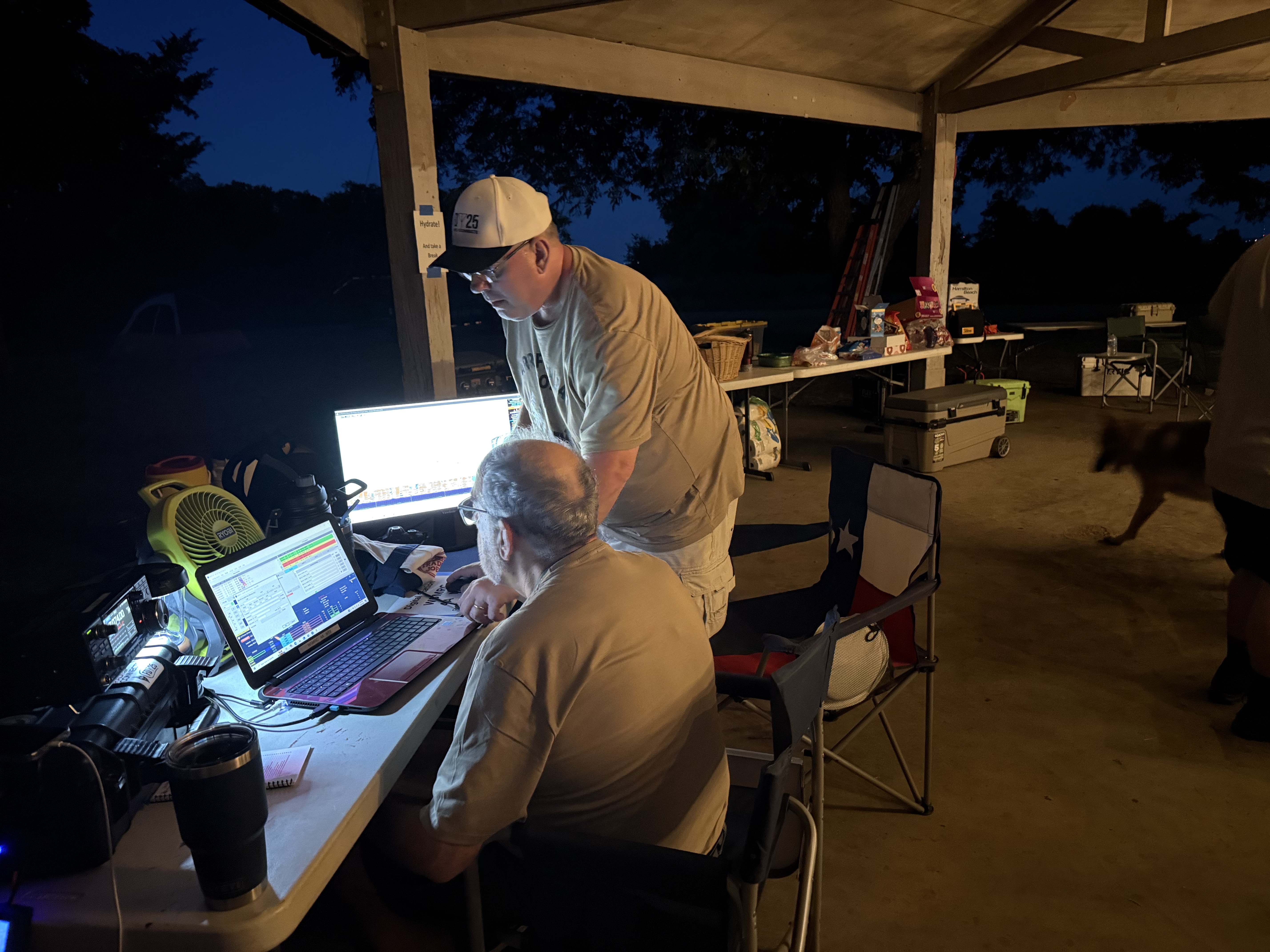


After six hours of battling the heat and my laptop at the park, we packed up and headed over to join the McKinney Amateur Radio Club (MARC) at their official Field Day site.
The scene was hetic wih all of the operators working their bands and despite the bugs and the heat it was a lot of fun.electric. They had a sophisticated four-station setup:
- Digital Station: Where I felt right at home.
- CW & Voice Stations: A mix of high-speed Morse code and rapid-fire SSB exchanges.
Joining the club setup allowed me to see how a large-scale operation functions. I met a few local hams that were working the “night shift” and finally felt the full “community” aspect of the hobby. It’s one thing to talk to a stranger over the air; it’s another to share a cold water and a laugh over a stubborn antenna tuner with someone from your own town. I had actually joined the club 6 months prior but never attended a meeting. After Field Day I am happy to report I am now a regular at the club meetings.
Final Thoughts for New Hams
If you’ve been nervous about participating in Field Day because you “don’t have the right gear” or “don’t know enough yet”—forget all of that. My gear didn’t work perfectly. I didn’t make a record-breaking number of contacts. But I learned more in those 24 hours about my equipment and my community than I have in the last year of sitting in my office.
Field Day is about the attempt. It’s about the public display of our craft and the willingness to fail, fix, and try again.
I’ll see you on the air (hopefully with fewer computer issues) next year!
73, Chris - K5CTW The Ham Radio Lab